
Our Services
"A good chiropractor finds out what is wrong. A thorough chiropractor figures out why." — Dr. Dale Thompson
Our Journey Begins With Your History
We make the most of our initial visit by taking a detailed history of your health, as well as the problem at hand. It's important that we have records of any past or concurrent treatment, diagnostic studies, and rehab programs, along with a record of current medications, diagnoses, and surgical procedures — so we know the full picture and any contraindications to care.
Our evaluation consists of four parts, which often begin the moment we see you walking across the parking lot or down the hall: history, the neurology/orthopedic exam, the functional evaluation, and the report of findings — when we discuss our impressions and next steps together.
We focus not only on diagnosing where you hurt, but why. Five different people with low back and leg pain can have five different diagnoses and causes for their complaint, so care is customized to what each person actually has.
The Cornerstone of Our Care
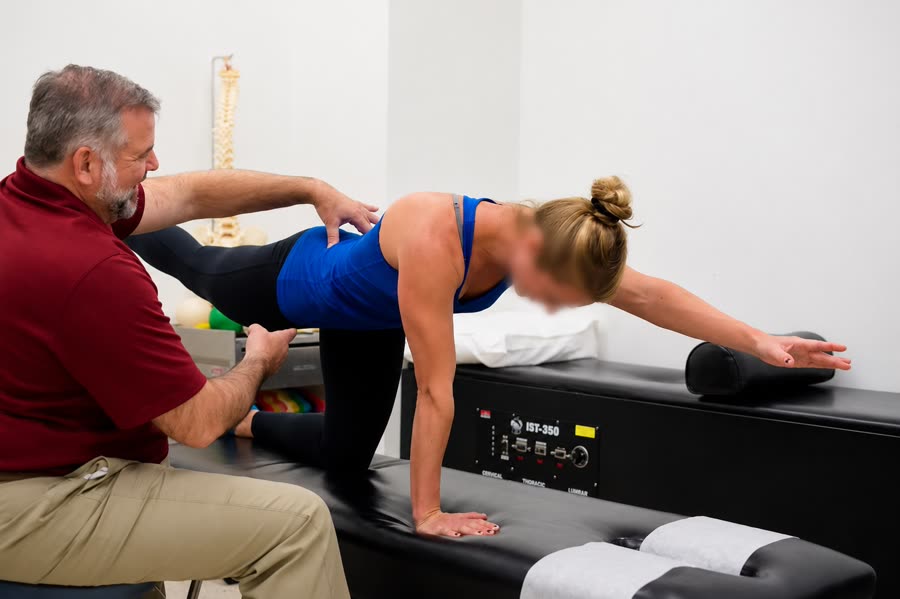
Manual manipulation — also called a chiropractic adjustment, Chiropractic Manipulative Therapy (CMT), or Spinal Manipulative Therapy (SMT) — is the cornerstone of most chiropractic offices, ours included. Research over the past several years has firmly backed the use of manual methods for musculoskeletal complaints.
Manual methods, paired with an overall recovery and prevention program, get great results. We teach the home care needed to maintain and continue improvement — consistency with home exercise based on our in-office work is what makes the long-term difference.
References
Goertz CM, et al. Effect of Usual Medical Care Plus Chiropractic Care vs Usual Medical Care Alone on Pain and Disability Among US Service Members With Low Back Pain. JAMA Netw Open. 2018;1(1):e180105.
Rubinstein SM, et al. Spinal manipulative therapy for acute low back pain. Cochrane Database of Systematic Reviews. 2012, Issue 9.
Knowing When — and When Not — to Order Imaging
Some people ask why we don't jump to imaging right away. In the absence of red flags, current science indicates it's better to develop a conservative action plan first, and order imaging and special tests based on clinical indications — not as a knee-jerk reaction.
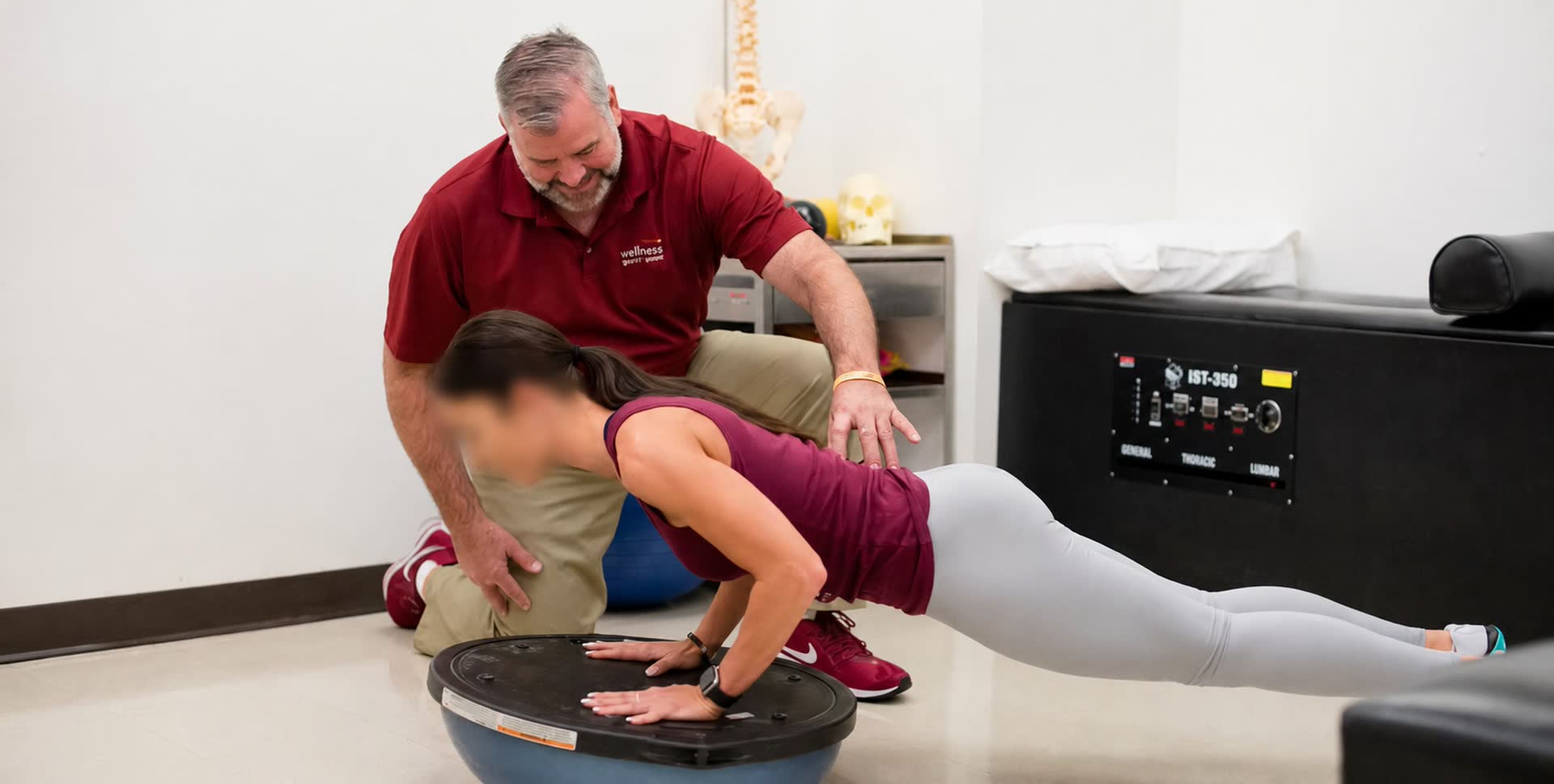
Very often the root of musculoskeletal pain is a functional problem — deficits in mobility, stability, and endurance — where imaging gives very little useful information. Research has shown that early, non-indicated MRI can have a real negative effect on outcomes.
References
American Chiropractic Association Choosing Wisely®: In the absence of red flags, do not obtain spinal imaging for patients with acute low-back pain during the six weeks after onset of pain.
Jarvik JG, et al. Association of Early Imaging for Back Pain With Clinical Outcomes in Older Adults. JAMA. 2015;313(11):1143-1153.

With Brian Jeffries, LMT
Our massage therapy is focused on improving mobility, reducing tension, and moving toward better function with less pain — delivered by a Licensed Massage Therapist with 18+ years of experience in injury recovery and sports massage.
Meet Brian JeffriesGetting You From Where You Are to Where You Want to Be
Every plan starts with the exam and report of findings above, then combines in-office treatment with clear home instructions. We typically reevaluate progress in two-week increments, so care stays focused and doesn't drift into open-ended visits.
The Full Toolkit, Applied Only Where It Helps
Corrective Exercise
Home exercise prescription and movement therapy, key to preventing recurrence. Programs are customized to your situation.
Soft Tissue Mobilization
IASTM, the Graston Technique, and FAKTR are used to treat soft tissue during the painful task itself, decreasing pain and allowing for better rehab.
Intersegmental Traction
Passive mobilization of the small joints of the back that decreases spasm and allows for more active therapeutic work.
Ice & Heat
The old "ice for acute, heat for chronic" formula is no longer considered current best practice — we apply each based on your specific condition.
Kinesio Tape
An added layer of connective tissue support that often allows a safer, better transition back to activity.
Patient Education
One of the single most important elements of our practice — the key to independence, limiting recurrence, and aging gracefully.
Not Sure Where to Start?
Call us and describe what's going on — we'll help you figure out the right first step.
Schedule an Appointment